


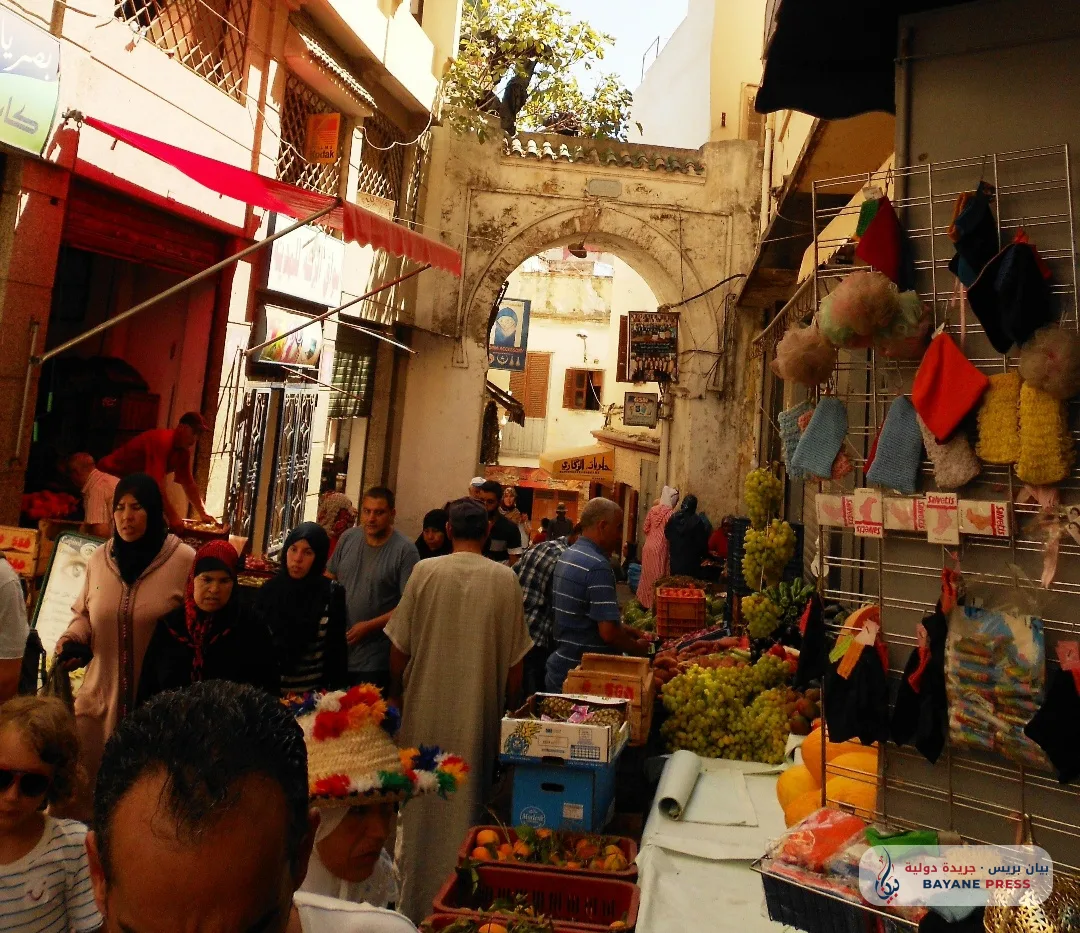
In Morocco, inflation is no longer just a set of figures announced by economic institutions; it has become a daily obsession haunting families in markets, shops, and gas stations, as the cost of food and basic services consumes an increasing share of family budgets. Between rising prices for vegetables, meat, and fuel, and limited income, thousands of Moroccans find themselves facing a difficult equation: how to secure the necessities of life without falling into a spiral of debt.
The latest data from the High Commission for Planning (HCP) reveals the depth of this social crisis. During the third quarter of 2026, 95.9 percent of households reported observing an increase in food prices over the previous twelve months, while 76.3 percent considered that their standard of living had deteriorated during the same period. More alarmingly, 39 percent of households have resorted to borrowing or depleting their savings to cover expenses, compared to 58.2 percent who can barely cover their costs with their income, while only 2.8 percent are able to save.
Despite recording a limited annual inflation rate of 0.5 percent in September 2026, the general price index rose by 1 percent compared to August, driven by a 1.6 percent increase in food prices. Meat and vegetables recorded a monthly increase of 4.3 percent each, while prices for milk, dairy products, and eggs rose by 1.6 percent, and fuel by 2 percent.
These figures reveal a clear economic paradox: a slowdown in annual inflation does not necessarily mean a return of prices to their previous levels, and the average index masks significant disparities between products. Food items recorded an annual decrease of 2.5 percent in September, despite their monthly rise, which explains the discrepancy between official indicators and the daily experience of some consumers.
Pressures intensified at the beginning of November, as the price of diesel jumped to nearly 17 dirhams per liter at several gas stations, while the price of tomatoes exceeded 14 dirhams per kilogram in some markets, amid rising transport, production, and distribution costs.
The wave of high prices is not linked to a single cause, but to a combination of internal and external factors, most notably the volatility of agricultural production due to climatic conditions and crop diseases, exports, and the rising costs of fertilizers and energy, in addition to transport costs and the multitude of intermediaries between the producer and the consumer. Furthermore, international market disruptions contribute to increasing pressure on an economy that imports a significant portion of its energy needs.
In a development reflecting the sensitivity of the situation, Moroccan authorities decided on Thursday, November 5, to temporarily suspend tomato exports to African markets, with the aim of supporting domestic market supply and curbing price increases, while exempting shipments destined for Europe. The decision came in light of declining productivity in the Souss-Massa region and rising costs of fertilizers and fuel, although its actual impact on consumer retail prices remains unclear.
If prices represent one facet of the crisis, weak purchasing power constitutes the other. The High Commission for Planning revealed that the unemployment rate reached 10.5 percent during the third quarter of 2026, compared to 30.5 percent among youth aged 15 to 24, indicators that reflect the difficulty of improving the income of broad segments of society.
The repercussions of high prices extend beyond household tables to their lifestyles, as some families are forced to reduce their consumption of meat and fish, postpone health expenses or the purchase of household appliances, and reorder their priorities between food, housing, education, and transport. These pressures are increasingly severe for low-income households, which allocate a large share of their resources to covering necessities.
Conversely, the government emphasizes its continued support for transport and the development of food product distribution mechanisms; however, the effectiveness of these measures remains linked to the extent to which they are reflected in final market prices.
This situation necessitates thinking about solutions that go beyond temporary interventions, by strengthening competition oversight and transparency in profit margins, improving distribution networks, supporting agricultural production intended for local consumption, and developing social protection, in addition to providing job opportunities and improving the real income of households.
High prices are not merely a transient economic imbalance, but a social issue that affects living stability and the dignity of the citizen.




Comments (0)
No comments yet. Be the first to react!