


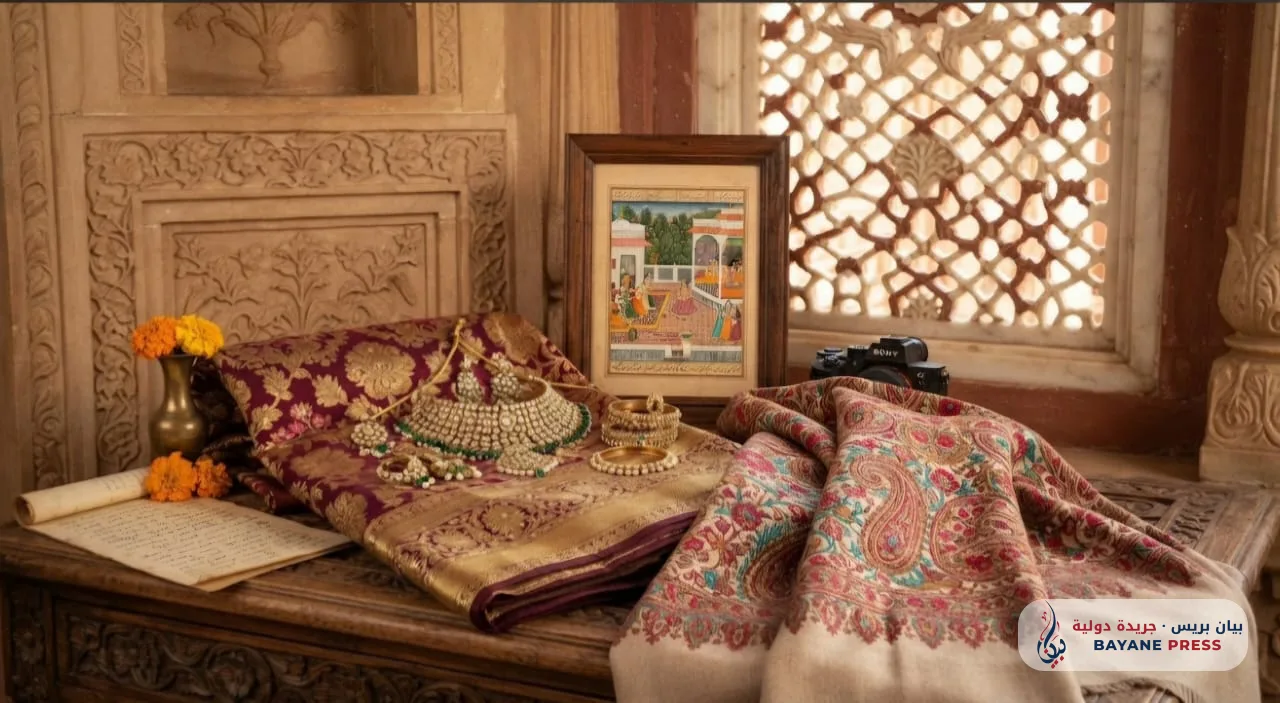
The Indian subcontinent reflects a unique cultural and civilizational heritage characterized by its extreme richness and diversity in styles of ornamentation and decoration inherited across its long history, influenced by multiple religions, philosophies, and geographical environments. In Indian thought, decoration was never merely a fleeting aesthetic element; rather, it was a profound expression of cosmic order and a spiritual harmony between humanity and nature. The roots of these early arts date back to ancient times, specifically to the Indus Valley Civilization and sites such as Mohenjo-Daro and Harappa. Archaeological excavations have proven the antiquity of metalworking and crafting arts through carnelian and terracotta beads, as well as the bronze "Dancing Girl" statue, which documents the deep-rooted culture of personal adornment and metallurgy for over four thousand years.
The aesthetics of Indian ornamentation were not confined to local geography; rather, they were documented by prominent travelers and historians across the ages who were dazzled by the precision of craftsmanship and the magnificence of decoration. Al-Biruni provided a deep scientific and philosophical reading of Indian society, while Ibn Battuta documented in the fourteenth century AD the aspects of luxury and extravagance in the court of the Sultanate of Delhi, mentioning details of gold-embroidered fabrics, assemblies adorned with luxurious carpets, and jewelry. He thus followed in the footsteps of the ancient Greek ambassador Megasthenes, who praised the luxurious royal attire decorated with gold and silver in the Maurya Empire.
Throughout history, India has been renowned for its exceptional craftsmanship in luxury textile arts, which formed the core of its decorative identity and trade lifeline. This is evident in pure silk brocade fabrics decorated with real gold and silver threads known as Zari, serving as a symbol of splendor and royalty. Alongside these are the legendary Kashmir shawls with their intricate botanical motifs—such as the traditional Indian cypress pattern—which require months of meticulous manual labor using pure pashmina wool to become the prized possessions of kings and emperors worldwide.
In a related context, the manifestations of decoration materialized in miniature painting and illustration arts, which served as a living mirror of royal and spiritual life. The Mughal school was distinguished by breathtaking precision in portraying faces and the court, alongside the use of pigments extracted from precious gemstones. Meanwhile, the Rajput school focused on depicting religious stories and major epics such as the Ramayana and the Mahabharata, as well as musical melodies filled with vibrant colors and deep emotional symbolism, drawing upon a rich visual heritage rooted in the Ajanta and Ellora caves and the mandala philosophy that guided decorative thought toward cosmic symmetry.
In the field of handicrafts, artisans excelled in decorating wood and metal using lacquer-coating techniques, ivory and mother-of-pearl inlay, and crafting complex traditional jewelry such as Kundan and Polki pieces studded with gemstones through precise techniques in shaping pure 24-karat gold to hold and secure stones without visible claws. Adornment was not limited to the personal physical aspect; it extended to touch the core of grand architecture through carvings and reliefs on temple and palace walls, as well as the pierced stone screens known as Jali. These showcase a unique fusion between architecture and pure aesthetic creativity, studied in the works of leading historians like Ananda Coomaraswamy and Percy Brown. Thus, these roots have evolved into a comprehensive visual language that encapsulates a philosophy of life—speaking of patience in weaving, wisdom in stone carving, and spiritual elevation in blending colors—making this heritage an immortal human legacy that continues to dazzle the world.




Comments (0)
No comments yet. Be the first to react!