

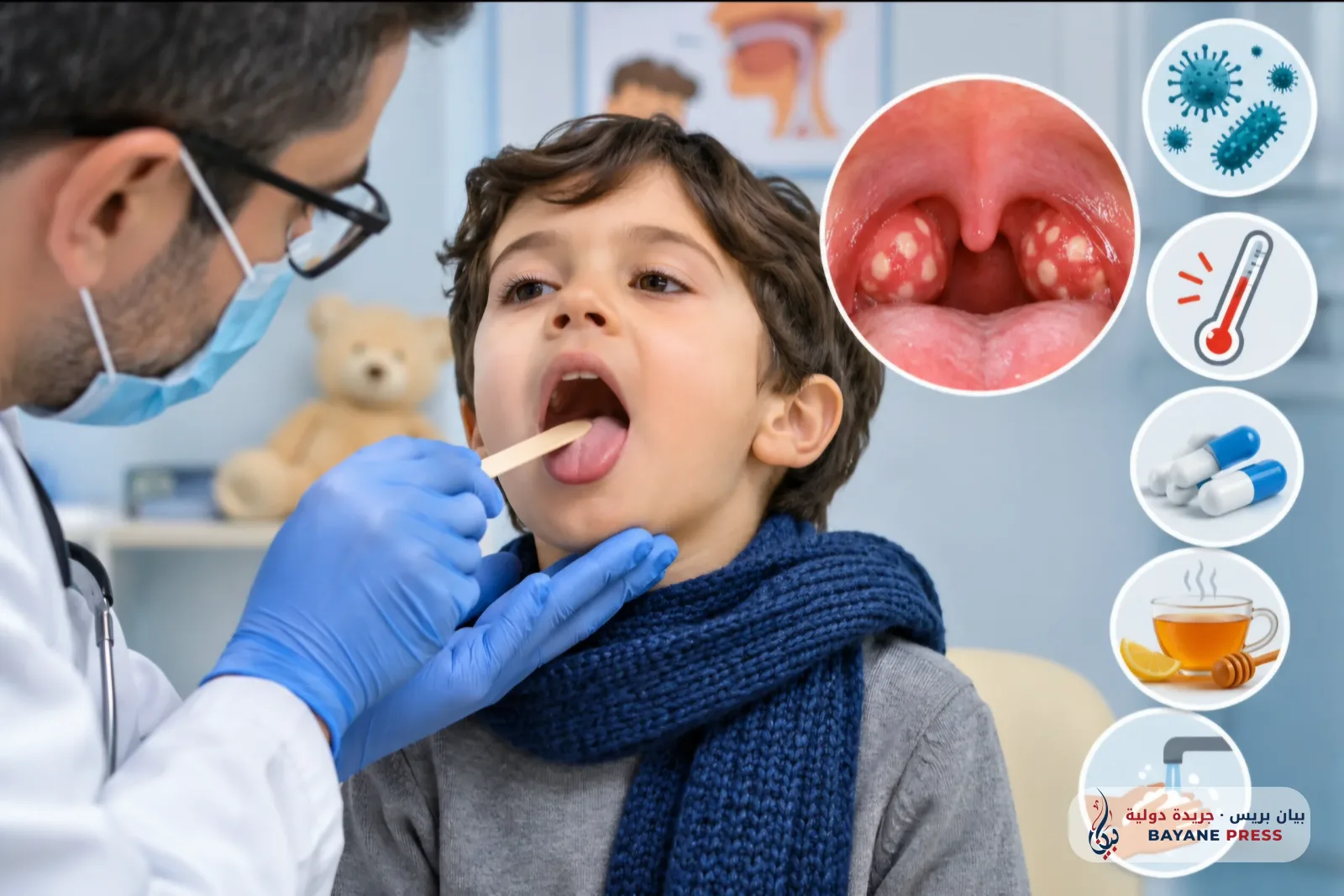
Tonsillitis is one of the most common health issues among children, especially during their early school years, as the risk of viral and bacterial transmission increases due to constant interaction in schools and daycare centers. Although most cases are mild and improve within a few days, neglecting certain symptoms or resorting to treatment without an accurate medical diagnosis can lead to health complications requiring urgent intervention. Hence, it is crucial to understand the nature of this disease, its causes, and its early signs, and to distinguish between cases that respond to home care and those requiring specialized medical treatment.
The tonsils are an essential part of the immune system; they are two masses of lymphoid tissue located on either side of the back of the throat, playing a defensive role in identifying germs that enter the body through the mouth and nose. However, exposure to a viral or bacterial infection can lead to inflammation and swelling, resulting in symptoms of varying severity, most notably sore throat, difficulty swallowing, and fever. Children are more susceptible to these infections due to frequent contact with their peers, as well as the ongoing development of their immune systems during early growth stages.
According to the American medical institution "Mayo Clinic," viruses are behind most cases of tonsillitis, most notably those causing colds and influenza, as well as other viruses that may affect the respiratory system. As for bacterial cases, Group A Streptococcus, scientifically known as Streptococcus pyogenes, is one of the most significant causes. The U.S. Centers for Disease Control and Prevention (CDC) indicates that this bacterium is responsible for about 20 to 30 percent of sore throat cases in children, and infection is more common in the age group ranging from five years to fifteen years, while the likelihood is lower in children under three.
The infection is primarily transmitted through respiratory droplets and direct contact with infected individuals. It can also be transmitted by touching contaminated secretions and then touching the mouth or nose, or by sharing food and drink utensils. The likelihood of the disease spreading increases in crowded and poorly ventilated places, especially when an infected child continues to attend school or daycare despite the appearance of symptoms. It is important to correct the common misconception that eating ice cream or exposure to cold air directly causes tonsillitis, as the primary cause of the disease is viral or bacterial infection, not the drop in temperature itself.
Symptoms of tonsillitis vary depending on the causative agent and the severity of the infection, but they often begin with a sore throat that worsens when swallowing, accompanied by redness and swelling of the tonsils, fever, fatigue, and loss of appetite. White patches or secretions may appear on the surface of the tonsils, along with swollen lymph nodes in the neck, headaches, and bad breath. In some cases, the child may complain of abdominal pain, nausea, or vomiting, especially when the infection is caused by streptococcus.
For younger children, it may be difficult to express pain or pinpoint its location, so the infection may manifest as frequent crying, refusal to eat or drink, sleep disturbances, or increased drooling due to difficulty swallowing. Therefore, parents should pay attention to sudden changes in the child's behavior, appetite, and activity, rather than just monitoring their temperature.
The pattern of symptoms helps in determining the nature of the infection. Viral inflammation is often accompanied by coughing, a runny nose, or hoarseness, while streptococcal infection may appear suddenly with high fever, severe throat pain, and swollen lymph nodes, without a clear cough. However, these differences do not always allow for an accurate diagnosis of the cause, and the presence of white patches on the tonsils is not definitive proof of a bacterial infection, as some viruses can cause similar manifestations.
For this reason, medical guidelines emphasize the necessity of a clinical assessment when a bacterial infection is suspected. This may require a rapid strep test or a throat swab for laboratory culture. The U.S. Centers for Disease Control and Prevention recommends verifying a negative rapid test result with a laboratory culture of a throat swab in children aged three years or older when streptococcal pharyngitis is suspected, as some rapid tests may not detect all infections.
Treatment varies depending on the cause. In viral cases, which account for the majority of infections, antibiotics are ineffective, and symptoms often improve spontaneously with rest and home care. It is recommended to encourage the child to drink water and fluids regularly to avoid dehydration and to provide soft foods that are easy to swallow, such as lukewarm soup and yogurt, with the possibility of using cold drinks or ice cream to soothe the sore throat if the child tolerates them.
Paracetamol or ibuprofen can be used to relieve pain and reduce fever, provided that the child's age, weight, and health status are taken into account, and the doses recommended by the doctor or pharmacist are followed. Aspirin should be avoided for children under sixteen due to its association with Reye's syndrome, a rare but serious complication that can affect the brain and liver. Topical preparations or throat medications should also not be used without verifying their suitability for the child's age.
If tests confirm a bacterial streptococcal infection, the doctor may prescribe an appropriate antibiotic, often penicillin or amoxicillin, unless there are allergies or medical contraindications requiring an alternative. The duration of antibiotic treatment lasts ten days in many cases, depending on the type of medication prescribed, with the necessity of completing the full course determined by the doctor and not stopping treatment on one's own as soon as symptoms improve.
The importance of correct treatment for streptococcal infection lies in limiting its transmission to others, shortening the duration of symptoms, and reducing the risk of certain complications. Conversely, taking antibiotics without medical necessity does not speed up recovery from viral infections, may expose the child to unnecessary side effects, and contributes to the worsening problem of antibiotic resistance, which has become one of the major global health challenges.
Although most cases of tonsillitis resolve without long-term problems, some infections may develop into complications requiring specialized medical attention, including peritonsillar abscess, which is a collection of pus that can cause severe pain and difficulty swallowing or opening the mouth, and may affect breathing if the swelling is severe. Streptococcal infection can also lead to immune complications, such as rheumatic fever, which may affect the heart and joints, and post-streptococcal glomerulonephritis, although these complications are uncommon.
Some symptoms require an immediate visit to the emergency department, especially if the child experiences difficulty breathing, is unable to swallow saliva, or shows signs of choking, severe throat swelling, or noticeable difficulty opening the mouth. Medical evaluation should also be sought quickly if the child refuses to drink fluids or shows signs of dehydration, such as decreased urination and severe lethargy, or if the fever and symptoms persist or worsen despite appropriate care.
In cases where episodes of tonsillitis recur significantly and affect the child's health and daily activity, the doctor may consider the possibility of surgical removal. Medical guidelines are based on specific criteria, including recording seven documented episodes within one year, five episodes annually for two consecutive years, or three episodes annually for three years, with the necessary clinical conditions met to assess the severity of the episodes. Surgery may also be considered when enlarged tonsils lead to serious breathing disorders during sleep, particularly obstructive sleep apnea, but the decision is not based on the number of infections alone, but after a comprehensive assessment of the benefits and risks.
Prevention begins with daily health habits within the family and school, primarily washing hands with soap and water regularly, teaching children not to share cups, spoons, and water bottles, and covering the mouth and nose when coughing and sneezing, while ensuring that frequently used tools and surfaces are cleaned and ventilation is improved within homes and classrooms.
It is recommended to keep an infected child at home when they have a fever or are unable to continue their usual activities. In cases of confirmed streptococcal pharyngitis, the child should be fever-free and at least 12 to 24 hours should have passed since starting the appropriate antibiotic treatment, according to approved health guidelines, before returning to school or daycare, to protect their health and reduce the likelihood of transmitting the infection to others.
There is no method that guarantees complete prevention of tonsillitis, but adhering to personal hygiene, avoiding close contact with infected individuals, and maintaining routine vaccinations recommended for children, including the flu vaccine, helps reduce the risk of some respiratory infections that may be associated with sore throat and tonsillitis.
In conclusion, while tonsillitis in children is common, it does not warrant excessive worry in most cases, but it does require awareness of its nature and careful monitoring of its symptoms. Early diagnosis, distinguishing between viral and bacterial infections, responsible use of medications, and adherence to prevention rules together form the basis for proper management of the disease. The family's role remains decisive in protecting the child from complications by avoiding indiscriminate treatment, monitoring the development of their health status, and consulting a doctor whenever unusual signs appear or symptoms persist without improvement.



Comments (0)
No comments yet. Be the first to react!