

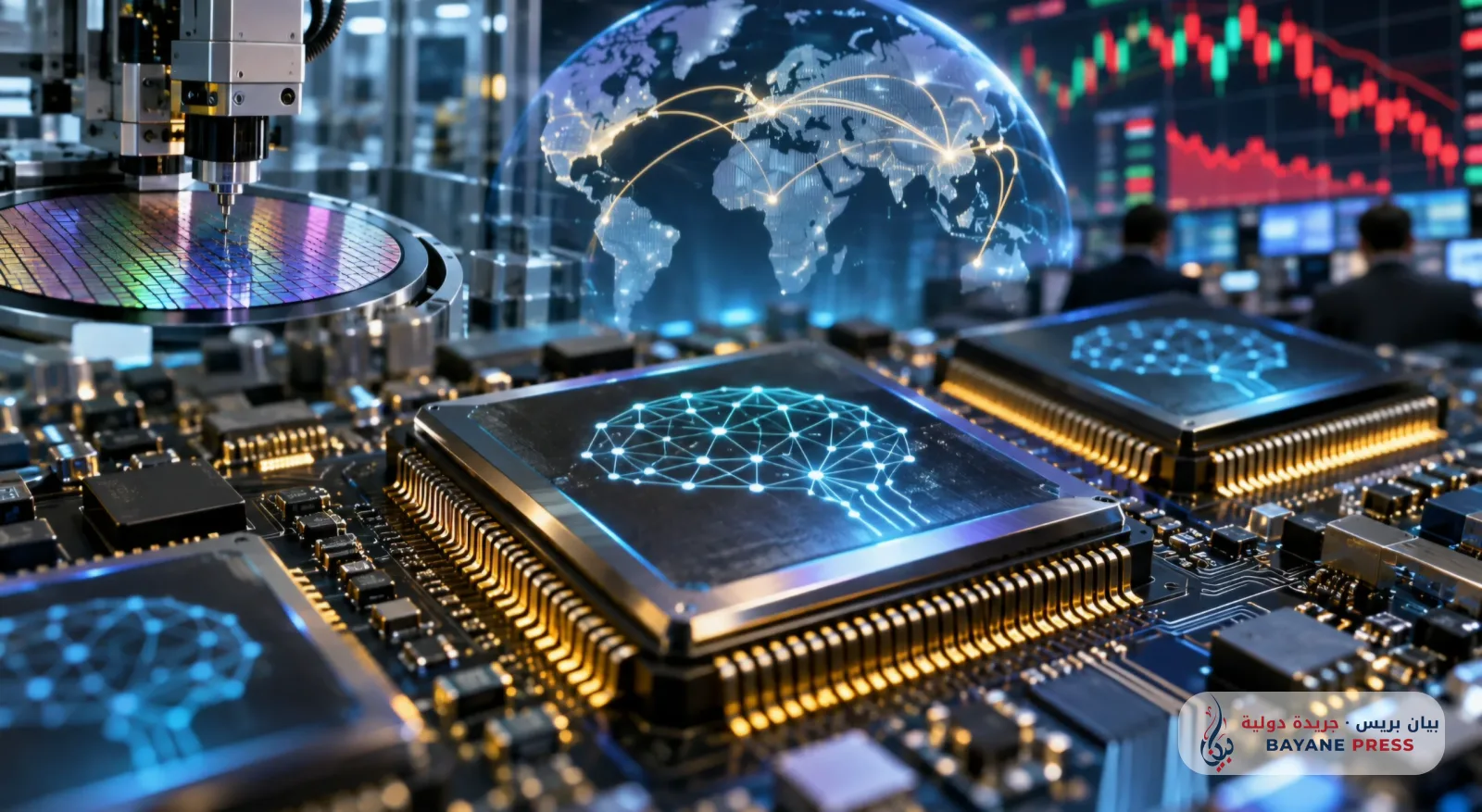
The United States has ignited a new chapter of technological competition with China, after the administration of President Donald Trump announced stringent measures to restrict the export of advanced electronic chips used in artificial intelligence. This move caused widespread disruption in Asian technology markets on Tuesday, November 17, 2026, and raised concerns regarding the future of massive investments in data centers.
The U.S. measures, announced on Monday, November 16, aim to prevent Chinese companies from bypassing existing restrictions by renting advanced computing power within data centers outside of China, rather than importing the chips directly. The new rules include five countries: Singapore, Malaysia, Thailand, Indonesia, and Brazil, where the export or re-export of specific types of advanced chips will now be subject to U.S. licenses.
The measures are scheduled to take effect on November 19, with data centers providing significant computing power to Chinese firms granted a 90-day grace period to obtain the necessary licenses to continue their services. The rules also impose stricter scrutiny on the identity of customers and the ownership of beneficiary entities to prevent circumvention of U.S. export controls.
These developments were quickly reflected in financial markets, as shares of Malaysian infrastructure companies "MN Holdings" and "Critical Holdings" fell by approximately 20 percent, while the stock of "YTL Power," a partner of Nvidia in AI projects, lost nearly 10 percent. Losses extended to technology companies in Singapore, Japan, Taiwan, and China, amid investor fears of delays in data center project implementation.
These restrictions come at a time when Southeast Asian nations have become a primary destination for technology investments. Since 2021, Malaysia has approved data center-related investments totaling approximately $95 billion, while announced investments in the sector in Thailand reached about $22.6 billion as of February 2026, illustrating the scale of economic interests that could be affected by the new legislation.
In its first official response, Singapore announced it is reviewing the U.S. measures and consulting with affected companies and relevant authorities in Washington, affirming its commitment to protecting its status as a global hub for trade and technology, and ensuring its territory is not used to circumvent international export regulations.
Analysts believe the measures may increase the costs of developing artificial intelligence systems for Chinese companies and prompt some investors to review their expansion plans for Asian data centers. Conversely, these pressures may provide Beijing with an additional incentive to accelerate the development of local chips and reduce its reliance on U.S. technology, further deepening the divide between the two powers in one of the most influential sectors for the future of the global economy.




Comments (0)
No comments yet. Be the first to react!