

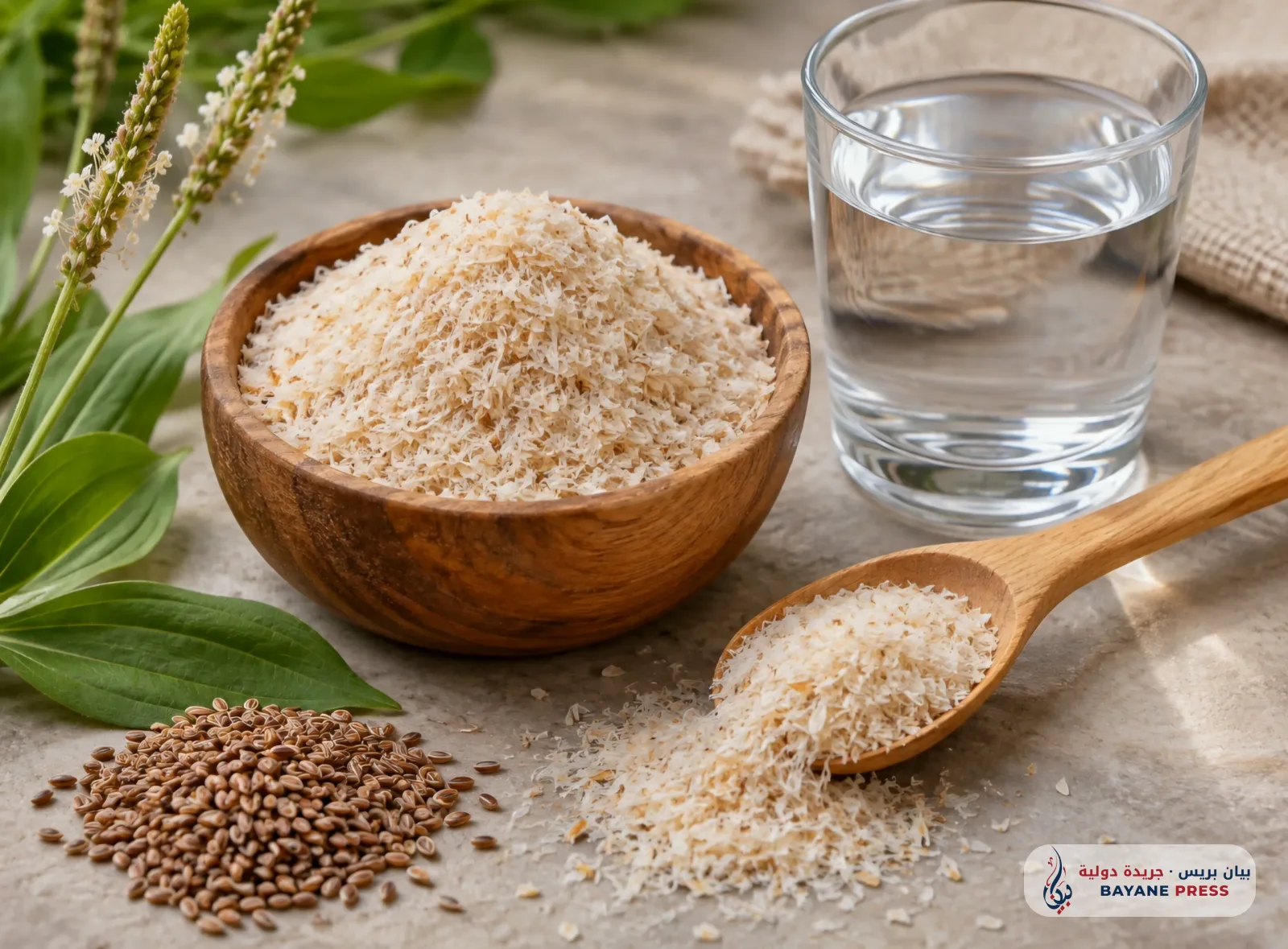
Amidst the growing interest in healthy nutrition and the search for natural ways to improve bodily functions and prevent lifestyle-related disorders, psyllium husk has emerged as a rich plant-based source of dietary fiber. It possesses unique properties that help regulate bowel movements and improve certain health indicators related to cholesterol and blood sugar. These husks have transitioned from traditional uses to the field of modern medical studies, which have revealed their benefits and the limits of their impact, confirming that their health value depends on how they are used and the appropriate dosages, far from the exaggerations that portray them as a cure-all for every ailment.
Psyllium husk is scientifically known as Psyllium Husk, also called Ispaghula husk. It is the outer coating of the seeds of the plant Plantago ovata, which belongs to the Plantaginaceae family. India is one of the most prominent producers of this plant, where it is widely cultivated before its seeds are harvested, the husks separated, cleaned, and dried to be marketed as whole husks, fine powder, or capsules included in dietary supplements and some pharmaceutical preparations.
The uniqueness of psyllium lies in its high content of dietary fiber, particularly water-soluble fiber, which is characterized by its ability to absorb fluids and form a viscous gel-like substance within the digestive tract. These fibers consist mainly of complex carbohydrate compounds, including arabinoxylan, which gives them their distinct physical properties. Unlike typical sugars and starches, these fibers are not fully digested by human enzymes; instead, they retain a large part of their structure as they pass through the intestines, which explains their effect on waste movement and the absorption of certain nutrients.
Treating constipation is one of the most proven medical benefits of psyllium husk, as it helps increase stool volume and retain water within it, which improves its softness, facilitates its passage through the intestines, and reduces the need for excessive straining during bowel movements. This property is particularly important for people suffering from functional constipation or a lack of fiber in their diet, especially since persistent constipation can cause bloating and discomfort and may contribute to worsening hemorrhoids and anal fissures. Specialized medical guidelines have supported the use of psyllium as a treatment option for chronic constipation, while emphasizing the need to consider each individual's health status.
A remarkable property is that the effect of psyllium is not limited to constipation; it may also help improve stool consistency in some people with diarrhea. This is due to its ability to retain water and form a gel that helps regulate the firmness of waste. Thus, the same fiber can help soften stool when it is hard and limit its liquidity in some cases of diarrhea. However, this effect does not make psyllium a substitute for medical treatment, especially when diarrhea is acute or accompanied by fever, blood, or signs of dehydration.
Medical interest in psyllium extends to Irritable Bowel Syndrome (IBS), a common digestive disorder that can cause abdominal pain, bloating, gas, and alternating constipation and diarrhea. Studies indicate that soluble fiber, led by psyllium, may help improve bowel regularity and alleviate some general symptoms of IBS. These fibers are distinguished from some insoluble types, such as wheat bran, which may increase discomfort in some patients. However, response varies between individuals, and excessive intake of psyllium or starting with high doses may lead to increased bloating and gas rather than relieving them.
Potential benefits do not stop at the digestive system; research has revealed a supportive role for psyllium husk in lowering levels of "bad" cholesterol in the blood. When the gel-like substance forms inside the intestines, it can affect the reabsorption of bile acids, prompting the liver to use some cholesterol to produce new bile acids. This process helps lower levels of low-density lipoprotein (LDL) cholesterol, the elevation of which is linked to an increased risk of heart and vascular disease.
Scientific analyses including multiple clinical trials have shown that regular use of psyllium can achieve a modest but beneficial reduction in bad cholesterol and total cholesterol, especially when incorporated into a balanced diet low in saturated fats. US regulatory authorities allow specific health claims linking the intake of soluble fiber extracted from psyllium husk, within an appropriate diet, to the potential to reduce the risk of coronary heart disease. However, these benefits do not mean dispensing with cholesterol-lowering medications when a doctor determines they are necessary.
As for diabetic patients, studies have shown that the viscous fiber found in psyllium can contribute to slowing the absorption of carbohydrates in the intestines, which helps mitigate the rapid rise in blood sugar after meals. Some trials have also indicated a limited improvement in fasting blood sugar levels and the HbA1c index, which reflects the average sugar level over previous months. These benefits are particularly evident in some patients with type 2 diabetes, but they remain supportive benefits that do not qualify psyllium as an independent treatment for the disease, nor do they justify stopping medications or adjusting their doses without medical supervision.
One of the uses that has gained wide popularity in recent years is including psyllium in weight loss programs. This idea is based on the fact that fiber absorbs water and increases its viscosity within the stomach and intestines, which may enhance the feeling of fullness and help some people reduce the amount of food consumed. However, scientific evidence regarding the direct effect of psyllium on weight is not entirely consistent; some studies have shown potential benefits, while other studies have not proven a clear and sustained reduction in weight or waist circumference. Therefore, it is not correct to describe it as a substance that burns fat, dissolves belly fat, or treats obesity on its own.
Other research points to the potential influence of psyllium on the microbial environment of the gut, known as the gut microbiome, which is a vast group of microorganisms that participate in a number of digestive and metabolic processes. Some components of psyllium fiber may undergo limited fermentation by gut bacteria, leading to the production of compounds including short-chain fatty acids, which play important roles in colon health. However, the nature of these effects and the extent of their clinical benefits still require further study, and there is insufficient evidence to consider psyllium a direct treatment for gut bacterial imbalance or chronic inflammation.
Conversely, claims are circulating on social media about the ability of psyllium husk to cleanse the colon of accumulated toxins, remove old waste, and provide guaranteed prevention of bowel cancer. The truth is that these claims confuse improving bowel movement with a medically inaccurate concept known as "detoxifying" the body. The body possesses natural systems to eliminate waste and harmful substances, primarily the liver, kidneys, and digestive system, and there is no reliable scientific evidence proving that psyllium removes toxins accumulated over years, treats tumors, or guarantees the prevention of colon cancer. Health prevention remains linked to a balanced diet, appropriate physical activity, and recommended medical check-ups.
It is important to know the correct way to use psyllium husk, because its benefit depends largely on the availability of sufficient water. Dosages vary according to age, health status, the purpose of use, and the product's composition. Some adults can start with a small amount of approximately three to five grams of husk, once daily, if this amount is consistent with the product instructions, then increase it gradually according to need and tolerance. It should be noted that the weight of the husk does not necessarily equal the weight of the soluble fiber it contains, and a household spoon is not an accurate way to measure doses due to the difference in density between whole husks and fine powder.
The specified amount is mixed with a large glass of water, usually no less than 240 milliliters for products that require it, stirring well and drinking the mixture immediately before it becomes too viscous. It is recommended to maintain hydration throughout the day, unless there are medical instructions limiting fluid intake. Psyllium powder should not be swallowed dry or taken immediately before sleeping and lying down, because its swelling upon contact with water may cause difficulty swallowing or a dangerous obstruction in some people.
As for the timing of use, there is no single rule that fits all cases. It may be used with food or at another time according to product instructions and the therapeutic purpose, taking into account the separation between it and certain medications. Its results in relieving constipation usually begin within two to three days, although the speed of response varies from person to person. It is preferable not to increase the dose suddenly, because gradual adjustment allows the digestive system to adapt to the fiber and reduces the likelihood of feeling bloating and cramps.
Although psyllium is generally considered safe for many adults when used correctly, it may cause side effects, most notably gas, abdominal bloating, a feeling of fullness, and digestive cramps. These symptoms may increase when starting with large amounts or not drinking enough fluids. In rare cases, allergic reactions can occur, including skin rash, itching, swelling, and difficulty breathing; inhaling the powder dust may also lead to allergic symptoms in some people.
The most important warnings concern people who suffer from difficulty swallowing, esophageal narrowing, or known or suspected intestinal obstruction, as the swelling of the fiber can cause serious complications. Medical evaluation should also be sought in the presence of severe unexplained abdominal pain, frequent vomiting, rectal bleeding, or a persistent and sudden change in bowel habits. The appearance of choking, difficulty breathing, or inability to swallow after taking psyllium is a condition that requires urgent medical assistance.
Drug interactions deserve special attention, because viscous fiber may affect the absorption of some medications when taken at the same time. Among the medications that require caution are digoxin used in some heart diseases, lithium, carbamazepine, and some anti-diabetic preparations. Medical references recommend a separation of three hours between psyllium and certain specific medications, such as digoxin, aspirin, and nitrofurantoin, while recommendations may differ for other medications. Therefore, it is recommended to consult a doctor or pharmacist to determine the appropriate time interval rather than relying on a single rule for all medications.
Regarding pregnant and breastfeeding women, some psyllium products can be used when needed, given that their primary effect occurs within the digestive system, but it is preferable to consult a doctor or pharmacist before starting them, especially in the presence of accompanying diseases or medications. As for children, the permitted doses vary according to age and type of product, and they should not be given adult doses without appropriate medical guidance.
Psyllium husk has nutritional uses that go beyond supplements and digestive treatments, as it is used in the manufacture of gluten-free bread and pastries, thanks to its ability to absorb water, improve dough consistency, and give it a more flexible texture. This property makes it useful in some recipes that rely on rice flour, corn, or other gluten-free alternatives. Although psyllium is a naturally gluten-free plant, people with celiac disease need to choose products guaranteed to be free from gluten contamination during manufacturing and packaging.
When buying psyllium husk, it is necessary to check the scientific name of the plant, the product ingredients, the fiber percentage, usage instructions, and the expiration date. It is preferable to choose pure products from reliable sources, while noting that some commercial preparations may contain sweeteners, flavorings, or additional ingredients that do not suit everyone. The package should also be kept tightly closed in a dry place away from moisture and excessive heat to preserve the quality and properties of the husks.
One common mistake is believing that taking larger amounts of psyllium necessarily leads to better health results, or that relying on it eliminates the need to eat vegetables, fruits, whole grains, and legumes. Psyllium, despite its nutritional value, does not provide all the elements the body gets from a varied diet. Adults generally need approximately 22 to 34 grams of fiber daily, depending on age and gender, and it is better to obtain most of this amount from natural foods, using supplements when needed.
Also, long-term use of psyllium may be appropriate for some people, especially when there is a persistent lack of dietary fiber or chronic constipation that has been medically evaluated, but the persistence or worsening of symptoms requires searching for their causes rather than settling for supplements. Constipation may sometimes be linked to certain medications, hormonal disorders, or other diseases that require different diagnosis and treatment.
Available medical data confirm that psyllium husk represents an important plant-based source of fiber and possesses proven benefits to varying degrees, led by helping to treat constipation and improve bowel regularity, with the potential to contribute to lowering bad cholesterol, improving some blood sugar indicators, and alleviating symptoms of irritable bowel syndrome. However, these benefits do not mean it is a comprehensive cure for diseases, nor does it grant it the ability to replace medications, a balanced diet, or medical follow-up.



Comments (0)
No comments yet. Be the first to react!